Detailing
Ceramic Coating in Atlanta
A coating is a sacrificial chemical barrier that makes paint easier to clean and slower to weather. It is not armour, and this page is as direct about what it will not do as about what it will.
What a ceramic coating does
A ceramic coating is a silica-based liquid polymer that cures into a hard, cross-linked layer chemically bonded to the clear coat. That is the meaningful difference from a wax or a sealant, which sit on the surface and wash away over weeks. A coating becomes part of the surface, and it stays there.
- Chemical resistance
The headline benefit, and the one that actually matters in Georgia. Bird droppings, bug remains, industrial fallout and road salt have a much harder time reaching the clear coat. It buys you time to get the contaminant off before it etches — it does not make the car immune to it.
- Hydrophobicity
Water beads tightly and sheets off the panel, carrying loose dirt with it. This is the property everybody films for social media, and it is also the first one to fade — long before the coating itself has stopped protecting anything.
- Ultraviolet protection
A coating slows the photo-degradation that turns clear coat hazy and fades red and black paint. On a car parked outside in an Atlanta summer this is a genuine, measurable benefit over an unprotected finish.
- Gloss and depth
Coatings have a higher refractive index than bare clear coat, which reads as depth rather than simply shine. Be clear-eyed about the source, though: most of the transformation people attribute to a coating came from the correction underneath it.
- Ease of cleaning
The most underrated one. A coated car releases dirt with far less scrubbing, and less mechanical agitation during washing means fewer new swirl marks. That is the real mechanism by which a coating protects a finish over years.
And what it does not do
Ceramic coatings are the most over-marketed product in this industry. Almost every complaint we hear about a coating is really a complaint about what somebody was told it would do. So, plainly:
- It does not stop rock chips
A coating is a few microns thick. A stone at seventy miles an hour is entirely unbothered by it. If chip protection on the leading edges is what you are after, that is paint protection film, and it is a different product at a different price.
- It does not prevent scratches or swirls
The 9H and 10H figures quoted throughout this industry are pencil-hardness numbers from a lab bench, and they do not translate into immunity from a grit-loaded wash mitt. You can absolutely swirl a coated car, and plenty of people do, usually within the first year.
- It does not mean you stop washing
Self-cleaning is marketing language. What it means in practice is that dirt releases more easily when you do wash. A neglected coated car looks like a neglected car, and contamination left to bond will blunt the coating faster than driving it ever would.
- It does not prevent water spots
Let mineral-heavy water dry on a hot coated panel in the sun and you will get spots. Left long enough they etch the coating itself, and the fix is polishing — which takes the coating with it. Drying properly still matters.
- It does not hide anything
A coating is optically clear and it does not fill. Every swirl, hologram and etch mark underneath it stays exactly as visible as it was, now sealed under a layer that has to be removed before anyone can fix them.
The systems we use
We work with Gtechniq and Koch Chemie, and we specify against the car and the ownership horizon rather than selling one product to everyone. The durability figures below are what we expect to see in Georgia with proper maintenance, not what the bottle claims.
Gtechniq Crystal Serum Ultra
Accredited application onlyThe hardest and longest-lived coating we apply, available only through accredited installers and not sold to the public. Two layers cured together, with genuine chemical resistance and a durability window measured in years rather than seasons. Specified for cars that are being kept — collector vehicles, long-term ownership, anything where the owner wants the protection decision made once.
Realistically 5 to 7 years of protectionGtechniq Crystal Serum Light
The common specificationThe sensible middle. Considerably more durable than a consumer sealant, easier to maintain and to renew than Serum Ultra, and the right answer for most daily-driven cars on a three-to-five-year ownership horizon. Usually topped with EXO for the hydrophobic behaviour owners actually notice day to day.
Realistically 3 to 4 yearsGtechniq EXO v5
Applied as a topperA sacrificial hydrophobic layer over either Serum. It carries the water behaviour and the self-cleaning, takes the wear that would otherwise fall on the coating underneath, and can be renewed on its own without disturbing the base layer. This is the part we refresh at annual maintenance.
Renewed every 12 to 18 monthsKoch Chemie 1K-Nano
Single-layer specificationOne layer, a single day, and a noticeably slick finish. Specified where the ownership horizon is short — lease returns, a car being prepared for sale, or an owner who wants real protection without committing to a multi-day booking. Honest about what it is: a shorter window, at a lower cost.
Realistically 12 to 18 monthsGtechniq C5 Wheel Armour and Smart Glass
Specified alongsideWheels and glass are different substrates with different problems. C5 handles brake-disc heat and makes bonded brake dust release rather than bake on. Smart Glass keeps the windscreen shedding water at speed, which is a safety benefit as much as a convenience one.
Wheels around 2 years, glass around 12 monthsWhy correction has to come first
A coating is optically clear and it is semi-permanent. Whatever the paint looks like on the day it goes on is what you are committing to for the next several years. Swirl marks under a coating are swirl marks that now require the coating to be machine-polished off before anyone can reach them — which means paying for the coating twice.
This is the most common and most expensive mistake in coating work, and it is usually the result of a pricing decision. A coating quoted cheaply is cheap because the correction is not in it. The coating is a small fraction of the cost of doing this properly; the days of correction underneath are the job.
We will not apply a coating over uncorrected paint unless the car is genuinely new and genuinely undamaged — and we check under the lights rather than assume, because most new cars are neither. If the finish needs work first, that work is paint correction, and it is where the result actually comes from.
Packages
Enhancement and single-layer coating
$900 – $1,600A one-step enhancement polish followed by Koch Chemie 1K-Nano. Lifts the finish, protects it, and gets the car back to you quickly. For newer cars in good condition, or a short ownership horizon.
12 to 18 monthsTwo-stage correction and Crystal Serum Light
$2,000 – $3,400The specification most cars should be on. Compound and refine the paint properly, then Serum Light with an EXO topper. The correction is the bulk of both the time and the cost, and it is what makes the coating worth applying.
3 to 4 years, with annual maintenanceMulti-stage correction and Crystal Serum Ultra
$3,800 – $7,500+Multi-stage correction worked panel by panel, then Serum Ultra over the paint, C5 on the wheels and Smart Glass on the screen. For collector cars, for finishes being prepared to be photographed, and for owners who intend to keep the car.
5 to 7 years, with annual maintenanceRanges rather than quotes. What moves the figure is the condition of the paint, not the coating chosen — two identical cars can sit a thousand dollars apart on how many correction stages the finish needs. We quote after inspection and depth readings.
Living with a coated car
A coating rewards a decent routine and punishes a careless one. None of this is difficult, and most of it is about drying rather than washing.
- Wash every two weeks
More often through winter if the car sees salted road. Contamination that is allowed to bond will dull the coating faster than mileage will, and it is far easier to remove before it has had a month to sit.
- Two buckets, grit guards, pH-neutral shampoo
Koch Chemie Nano Magic Shampoo or equivalent, a clean microfibre mitt, and separate media for the lower panels and the wheels. A coating tolerates a bad wash better than bare paint does. It does not enjoy one.
- Never an automatic tunnel
Brush tunnels will swirl a coated car exactly as readily as an uncoated one. Touchless is survivable occasionally, but the strongly alkaline chemicals they rely on will shorten a coating's life if it becomes routine.
- Dry properly, and never in the sun
A plush drying towel with a drying aid, or filtered forced air. What you are avoiding is letting water evaporate on the panel, because the minerals stay behind when it does. Do not wash a hot panel in direct sun.
- Decontaminate every six to twelve months
An iron remover clears the bonded fallout that blunts hydrophobicity. Owners routinely assume a coating has failed when it has simply become contaminated — a proper decon restores most of the beading on its own.
- Refresh the topper annually
EXO or an equivalent silica topper renews the sacrificial layer that has been taking the wear. This is the single thing that most extends a coating's useful life, and it is the core of the annual maintenance visit.
Where we work
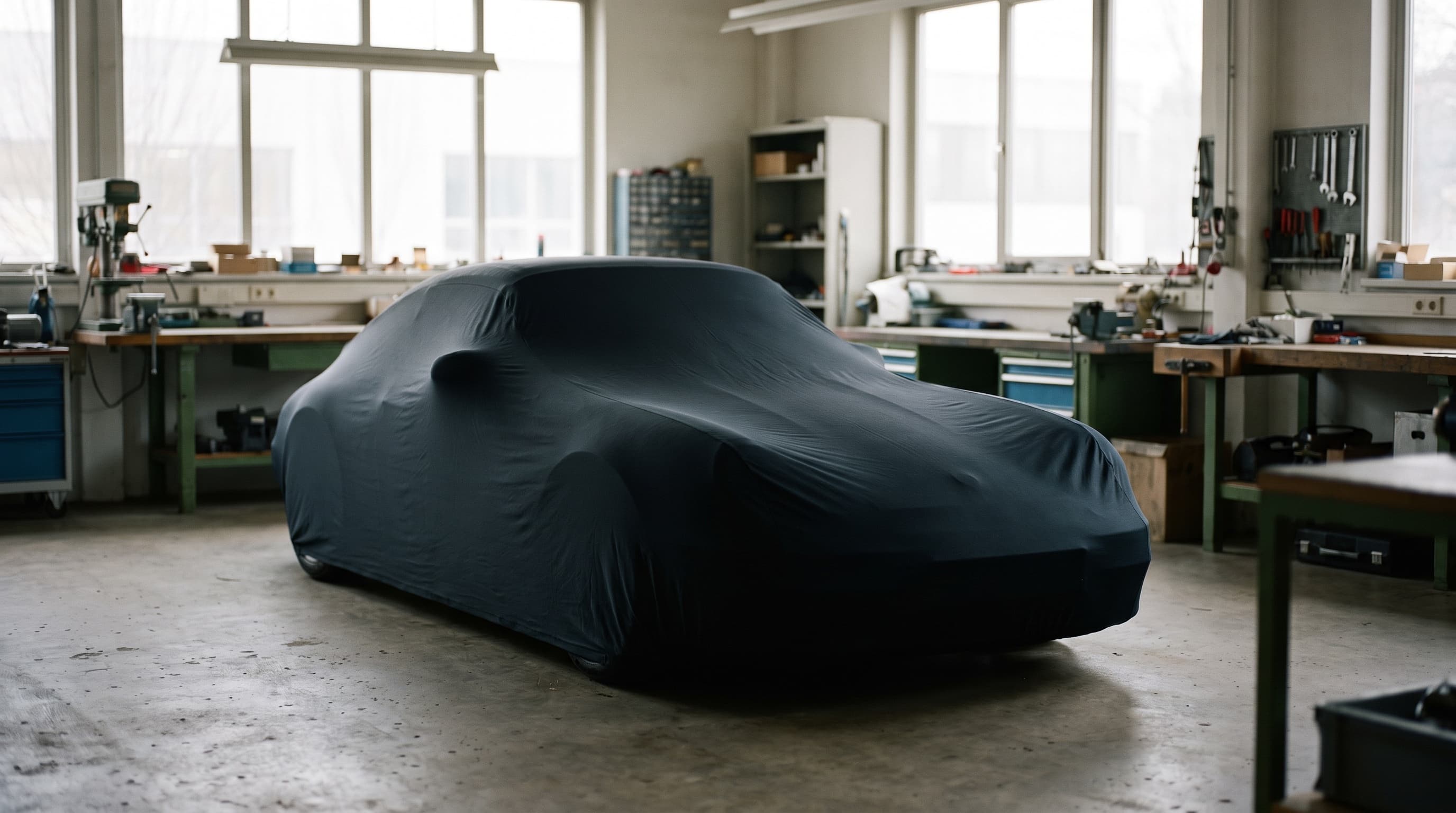
Coating work is booked out of our studio on Kingston Court in Peachtree Corners. Because a coating needs uninterrupted cure time before the car sees weather, these are multi-day bookings, and for most of the areas below we would rather collect the car than have you make the trip twice. Annual maintenance visits are shorter, and most owners drive those in.
The studio itself, off Peachtree Industrial. Cars are dropped in and collected in person.
Five minutes away. Close enough that owners routinely wait on a single-stage enhancement.
Ten minutes north on Peachtree Industrial. Almost always driven in.
Fifteen minutes via Medlock Bridge. Multi-day corrections are usually collected.
Twenty minutes up 141 or 400, and a frequent source of garage-kept weekend cars.
Twenty minutes across Holcomb Bridge. Enclosed collection on request.
Fifteen minutes down Winters Chapel, inside the 285 loop.
Straightforward run to the 285 and 400 interchange; collection avoids the commute.
Twenty minutes west on 285. Coating work is typically collected and returned.
Twenty minutes down Buford Highway. Mostly collected rather than driven in.
Fifteen minutes south, the closest of the inside-285 areas we serve.
Half an hour in traffic, so cars here are collected by enclosed transport as a rule.