The Journal · No. 02
Ceramic Coating in Atlanta: What to Know Before You Book.
Considering ceramic coating in Atlanta? We explain pricing factors, paint correction, cure time, PPF, warranties, and aftercare before you book your car.
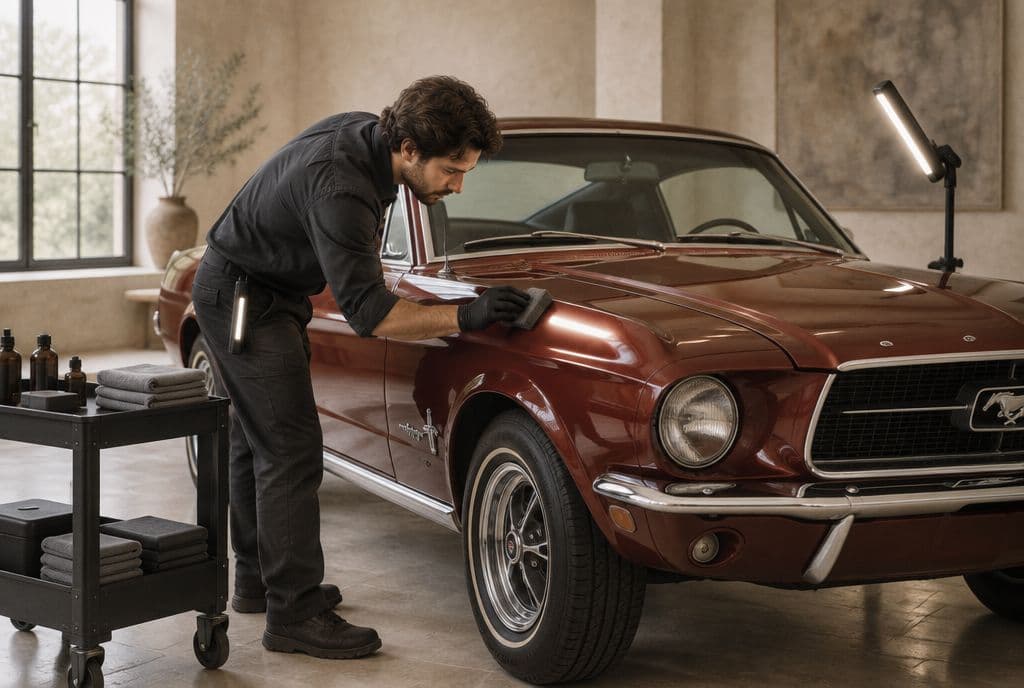
Ceramic coating in Atlanta is worth considering when you want easier washing and a well-kept finish, not an invisible shield against every scratch. At Cheval Noir Motorsports, we begin with the paint and the way you use the car: a daily commute, a weekend drive, and the preservation of an original finish each call for a different brief.
TL;DR
- We judge ceramic coating in Atlanta by preparation, product suitability, cure conditions, and the care that follows.
- Paint correction addresses swirl marks before coating; preserving original paint takes priority over removing every defect.
- Ceramic coating supports easier maintenance. Paint protection film provides a physical barrier against chips.
- Compare itemized preparation, coverage, warranty obligations, and aftercare—not the number of years on a package.
How much does ceramic coating cost in Atlanta?
The price is driven by preparation, the surfaces included, the coating system, and the work required to deliver the agreed finish. A clean, lightly marked car and a heavily swirled car of the same model are different jobs. Comparing their quotes without comparing preparation tells you little.
We separate the cost of improving the paint from the cost of protecting it. Paint correction involves labor before the coating goes on. Application, inspection, and the space needed for the specified cure also belong in the scope. A headline coating price does not explain which of these tasks it includes.
Ask for these cost drivers to be itemized:
- Vehicle size and access. More surface area, intricate panels, and difficult trim increase the work.
- Contamination removal. Bonded deposits, old protection, and surface residue require preparation suited to the finish.
- Paint correction. Light refinement and extensive correction carry different labor requirements. Deep defects also need limits, not just more polishing.
- Coating system. The exact product, approved application method, and included surfaces define what is being purchased.
- Coverage. Paint, wheels, glass, trim, and existing film are separate surfaces. Do not assume a paint quote includes them all.
- Cure arrangements and follow-up. Indoor holding, inspections, and required maintenance visits belong in the total ownership cost.
An inexpensive quote that excludes correction is not directly comparable with one that includes it. Nor is a larger package automatically better: paying to chase a deep scratch on vulnerable original paint buys the wrong result.
We recommend a written quote that names the correction objective, coating product, coverage, exclusions, and aftercare obligations. Establish whether future inspections or maintenance are included or charged separately. That is how to answer the cost question without treating unlike jobs as one Atlanta-wide price.
Why does paint correction come before ceramic coating?
A coating does not remove swirl marks, oxidation, or deep scratches. If improving those defects is part of the brief, the appropriate paint correction comes before application. Polishing afterward works on the coated surface and disrupts the protection in that area.
We approach correction as controlled material removal, not a compulsory pursuit of perfection. On a well-kept daily driver, light refinement addresses an agreed appearance goal. On an original-paint collector car, retaining material takes precedence over making every panel look newly painted.
Our starting questions concern the finish's history and condition:
- Is the paint original, repaired, repainted, or undocumented?
- Are the visible marks superficial, deep, or signs of a failing finish?
- Which edges, body lines, and adjacent materials need protection from the process?
- What do suitable paint measurements establish, and what remains unknown?
- Which defects should remain rather than justify further material removal?
A conventional paint depth gauge on a metal panel measures total coating thickness above the substrate. It does not isolate the clear coat remaining. We do not turn a reassuring total into permission for unlimited polishing.
Preparation still matters when correction is unnecessary. Washing, suitable decontamination, and removal of interfering residue are different tasks from abrasive refinement. New paint is not automatically clean paint, and a newly delivered car still deserves inspection.
For the preservation questions behind that decision, our guide to choosing a detailer for a collector car in Atlanta explains what to assess before authorizing work.
How long does ceramic coating last?
There is no single lifespan for ceramic coating. The product's specification, correct application, use, storage, and maintenance determine the answer. A daily driver parked outdoors receives different exposure from a car kept indoors and driven occasionally.
Our preservation work typically pairs paint correction with a five-year ceramic coating carrying a warranty. That is a service term, not a promise that every coated car performs identically for five years without care. The written warranty must explain the covered failure, required maintenance, exclusions, and remedy.
We separate three questions that package descriptions often combine:
- What durability does the manufacturer describe? Identify the exact coating, not just a brand name.
- What does the warranty cover? Read the conditions, registration requirements, and inspection obligations.
- How will performance be maintained? Establish the washing routine and what happens when contamination accumulates.
Water beading alone does not answer all three. Dirt or deposits change water behavior, and a maintenance product changes the surface's hydrophobic effect. We assess a cleaned surface before treating reduced beading as proof that the coating needs replacement.
Do not book by duration alone. A sound preparation plan and care routine are more useful than a long term attached to an unexplained product.
Ceramic coating vs PPF: which protection does your car need?
Ceramic coating and PPF—paint protection film—serve different purposes. We favor coating when easier cleaning and surface care are the priorities. Film is the physical barrier to consider when stone chips and road debris are the central concern.
XPEL's paint protection film guidance describes film protection against chips and scratches, including the limits of self-healing for deeper damage. That is a different proposition from a thin coating that improves water behavior and resistance to everyday contamination.
| Decision | Ceramic coating | Paint protection film |
|---|---|---|
| Main purpose | Easier cleaning and surface protection | A physical barrier against chips and surface damage |
| Water behavior | Hydrophobic performance depends on the coating system | Depends on the film and any compatible surface treatment |
| Existing defects | Does not remove them; agree on preparation first | Does not repair damaged paint beneath it |
| Appearance | Product must suit gloss, matte, or other finish requirements | Film type, edges, and installation affect presentation |
| Continuing care | Requires correct washing and contamination management | Requires film-safe care and attention to edges and condition |
These options are not mutually exclusive. A compatible coating is applied over film only according to the relevant manufacturers' instructions. Compatibility matters more than the idea that an additional layer must improve everything.
For a highway-driven car, discuss film coverage on vulnerable areas before deciding on coating for the remaining surfaces. For original paint, installation and eventual removal also belong in the preservation discussion. We do not assume that either treatment is appropriate solely because the car is valuable.
Is ceramic coating worth it?
Ceramic coating is worth it when easier care and an improved, well-prepared finish match your expectations. It is not worth buying as a substitute for careful washing or chip protection.
A daily driver is a practical candidate when its owner plans to keep it and maintain it properly. A weekend or collector car benefits from the same attention to surface condition, but its history changes the preparation limits. The badge does not determine the decision; the finish and intended use do.
We would set a narrower scope—or choose another approach—when:
- The owner expects a scratch-proof surface.
- Stone-chip protection is the primary goal.
- The existing paint cannot support the proposed preparation.
- The car will continue through abrasive washing practices.
- The maintenance and warranty obligations do not fit the owner's routine.
Coating also does not make bird droppings, mineral deposits, or tree sap harmless. Protection changes how a surface responds; it does not authorize leaving contamination indefinitely. We make the care commitment part of the booking decision, not an afterthought at handover.
How to choose a ceramic coating shop in Atlanta
We would choose a shop by its explanation of the work, not by a ranking or a dramatic reflection photograph. Ask to see how it assesses paint, sets correction limits, controls application conditions, and records the result.
The useful questions are direct:
- Preparation: What washing and decontamination are included? What correction is proposed, and which defects will remain?
- Products: What is the exact coating name? Why is it suitable for this paint, trim, or film?
- Application: Where is the car kept, and how are temperature, humidity, dust, and lighting managed?
- Cure time: When is pickup permitted? When can the car get wet, be washed, or receive maintenance products?
- Warranty: Who provides it? What is covered, what is excluded, and which inspections or services are required?
- Documentation: Will the record identify the starting condition, treated surfaces, products, application date, and aftercare?
- Changes: What requires renewed approval if the paint responds differently from the initial assessment?
A written scope protects the conversation from becoming a vague package sale. The completion record should describe what was done and what was deliberately left alone.
We also distinguish paint preservation from full-vehicle restoration. Correcting the finish restores clarity and shine; it does not rebuild the car or erase its history.
Ceramic coating cure time: what happens before pickup?
Application time and cure time are not interchangeable. Removing excess coating from the surface does not mean the car is ready for rain, washing, or unrestricted use. The selected product's instructions control those milestones.
As one documented example, GYEON's Q² Pure EVO instructions require keeping the surface out of direct sun and away from water for the first 12 hours. That is a product-specific early protection period, not a universal full-cure time and not a claim about which product we use.
Before booking, establish:
- The permitted application conditions for the named product.
- Where the car will remain during its initial cure.
- The earliest safe exposure to water and the first-wash date.
- Restrictions on cleaners, covers, and additional surface treatments.
- What to do if rain or contamination interrupts the planned handover.
Georgia humidity belongs in the application plan because the product's permitted conditions and working time must be respected. We do not replace those instructions with a blanket rule that every Atlanta installation needs the same number of hours. Arrange pickup around the treatment, not the other way around.
Ceramic coating aftercare in Atlanta
Ceramic coating maintenance is ordinary care carried out deliberately. Use the shampoo, dilution, washing method, and maintenance products specified for the coating. GYEON's product instructions, for example, call for pH-neutral shampoo and avoidance of harsh chemicals; the installed system's own requirements remain the reference.
Manage heat, pollen, and moisture
Georgia heat makes timing important. Wash in shade on cool panels, work in manageable sections, and do not let cleaner or rinse water dry on the surface. Hydrophobic means water-repellent; it does not mean water-spot-proof. Water beads still leave deposits when they evaporate.
During pollen season, rinse loose material away before contact washing. Do not wipe a dusty car dry to recover its shine. A coating does not make that contact safe, and the resulting swirl marks undermine the finish you paid to improve.
Humidity and rain also make sheltered early curing and thorough drying relevant. Keep the handover restrictions separate from the ongoing wash routine. The instructions for a fresh coating are not identical to those for a fully cured surface.
Keep the routine simple
- Remove loose contamination before using a clean wash mitt.
- Use appropriate, well-maintained towels and avoid dragging dirt across the paint.
- Rinse thoroughly and dry without leaving water on hot panels.
- Address bird droppings, sap, and visible deposits promptly with compatible methods.
- Avoid abrasive automatic washes and unnecessary polishing.
- Follow required inspections and keep maintenance records with the warranty.
If water behavior declines, arrange an assessment rather than applying increasingly strong chemicals. First identify contamination, product compatibility, and the condition of the surface. Adding a topper without understanding the problem changes the observation, not necessarily the underlying condition.
FAQ
What determines the cost of ceramic coating in Atlanta?
Preparation, correction labor, vehicle size, coating system, coverage, and cure arrangements drive the price. We compare itemized scopes and continuing maintenance obligations, not headline package prices.
Does every car need paint correction before ceramic coating?
No. We correct defects before coating when refinement is part of the agreed objective and the paint supports it. Suitable cleaning and surface preparation remain necessary even without abrasive correction.
Does ceramic coating stop rock chips?
No. We treat paint protection film as the physical barrier for chip protection. Coating serves easier surface care and does not replace film.
How long before a coated car can get wet?
The named coating's instructions determine the earliest water exposure. We require a written handover plan rather than applying one cure schedule to every product.
Is ceramic coating useful for a daily driver?
Yes, when easier cleaning and proper ongoing care are the goals. We reject the expectation that coating removes the need to wash carefully or protects against every scratch.
Can ceramic coating be used on original paint?
The finish requires an assessment and a suitable product before that decision. We put retention of original material ahead of aggressive correction or automatic coating application.
Begin with the finish you want to keep
A responsible coating brief explains the work before application and the care afterward. We consider both essential. The useful result is not simply a striking handover photograph, but a finish you understand how to look after.
For a private discussion with Cheval Noir Motorsports, tell us about your car and the ceramic coating work you are considering.